
The beginning of photography started almost 200 years ago with Louis Daguerre, a French artist who advanced photographic technology by building on previous ideas from other early inventors. In 1837, he invented the Daguerreotype process, the first form of modern practical photography. This invention laid the foundation for how we view and capture the world around us today.
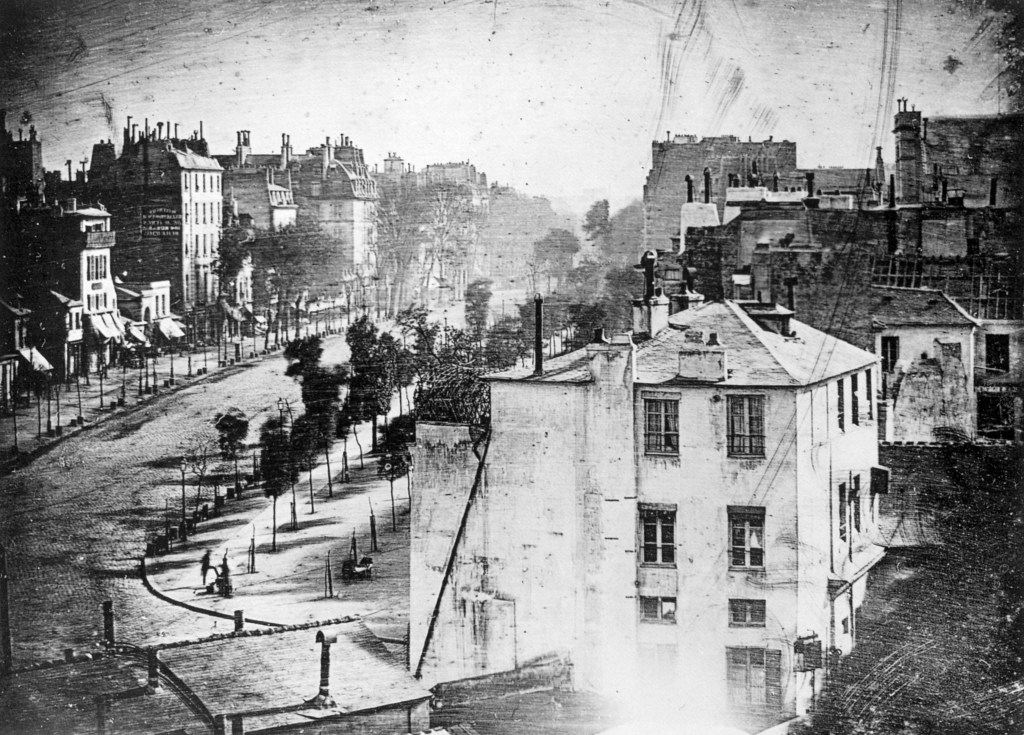
One year later, in 1838, Louis Daguerre captured the first photo of a human being. The picture shows a man cleaning his boots on the pavement in Paris. This process took 7 minutes of exposure to capture the shot. The long exposure meant many other people walking on the street were not captured as they were not standing still. This famous photo is known as “Boulevard du Temple.”
The journey of photography continued to evolve throughout the 19th and 20th centuries, with each era bringing new advancements and innovations.
19th Century
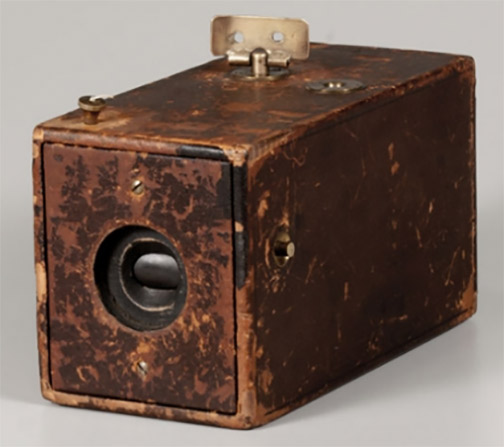
In 1888, George Eastman unveiled the Kodak camera, a game-changing invention. It was a simple and portable camera that used roll film, allowing users to take up to 100 photographs without reloading.
20th Century
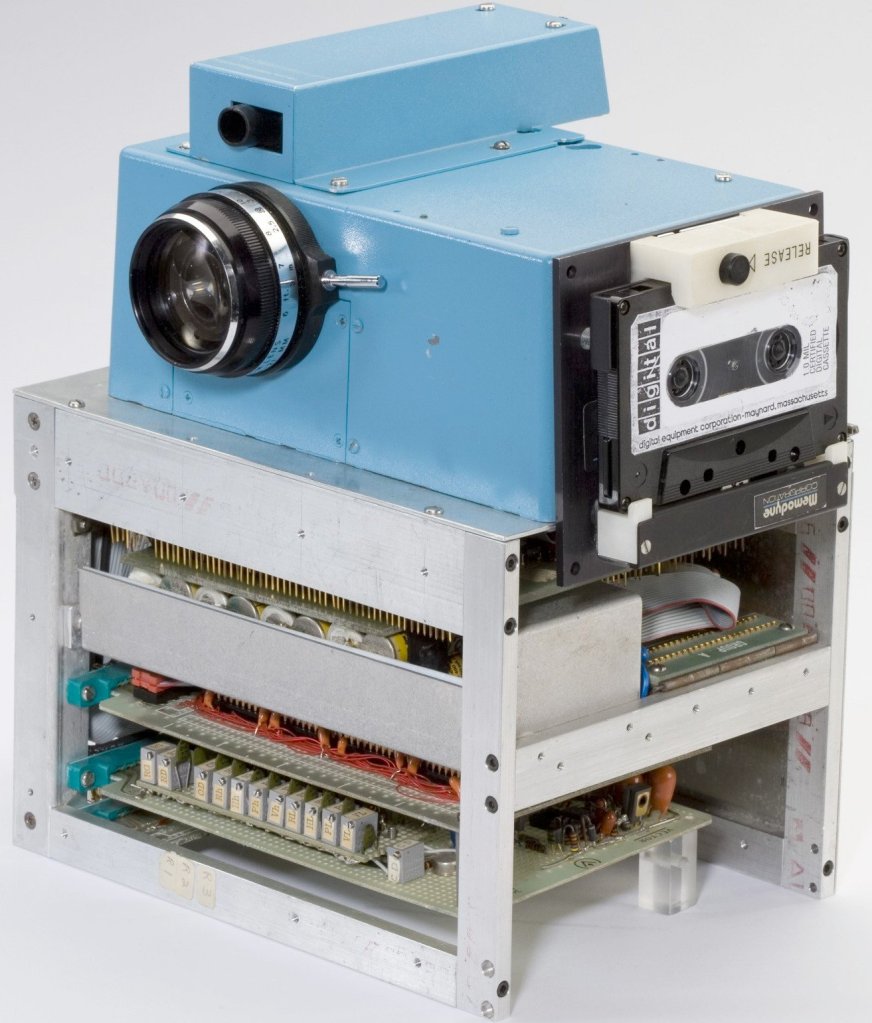
The 20th century saw a surge of new technologies. In the 1970s and 80s, prototypes of the first true digital cameras were developed, including the Kodak camera by Steven Sasson in 1975 and the Sony Mavica in 1981. These early cameras used magnetic tape and floppy disks for storage.

These developments paved the way for digital revolution, transforming photography in the years to follow.
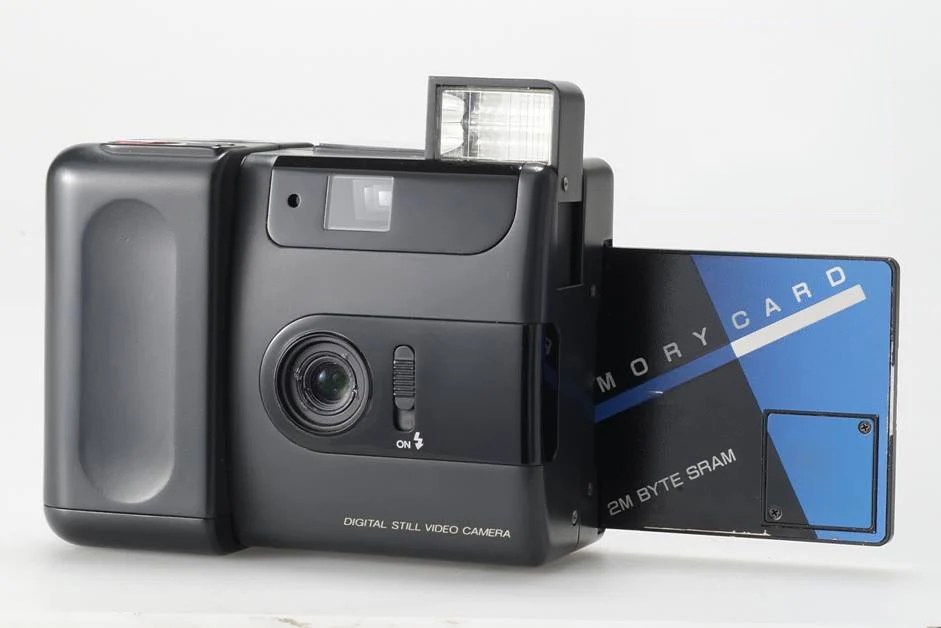
In 1988 the first truly all digital camera came from Fujix (a collaboration between Fujifilm and Toshiba), signaling the beginning of a new era in photography.
In 1999, the Kyocera VP-210 introduced a concept that we still use frequently today – phone photography! The 2-inch screen allowed users to view photos instantly, but it wasn’t until the invention of the smartphone that phone cameras truly exploded in popularity.

21st Century
In the 21st century, digital camera manufacturers advanced technology even further, resulting in the sophisticated cameras we have today, with features like interchangeable lenses and complex manual controls.
As cameras became smarter, smaller, lighter, and more efficient, mobile phones also advanced. Fast forward to 2007 – the first ever Apple iPhone was introduced. Apple combined a single camera interface, easy-to-use downloading and sharing tools, and a groundbreaking App Store, providing a platform for third-party developers.

Now, smartphones have multiple lenses, endless video capability, high resolution, and much more. Capturing and sharing moments has become as effortless as the click of a button.
Alongside the evolution of photography, the development of photo editing techniques and software has also expanded. Photographers can enhance and unleash their creativity through computer editing software programs and phone applications, placing powerful editing tools and filters at the fingertips of millions around the globe.
Apps like Retrica allow users to instantly apply filters and edit photos on the go, empowering them to express their unique perspectives and creativity like never before.
The accessibility of digital cameras has vastly expanded, allowing almost anyone with a camera to explore their creativity and share their perspective, transforming the way information is spread throughout the world. With an estimated over one trillion photos being taken every year, it’s impossible to ignore the impact this has had on society.
Today, you can’t go anywhere in public without seeing people taking photographs with either smartphones or cameras.
 Retrica

Leave a comment